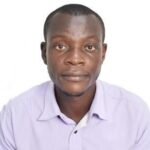
Parfait Kiswendsida TAPSOBA
Company: The Hunger Project Burkina Faso
Position: Food and Nutrition Security Programme Officer
Expert Summary
Agro-socio economist with 10 years of cumulative professional experience in research and rural development in Burkina Faso, Benin, Niger, Mali, and Belgium, my overall career objective is to contribute to the development, dissemination, and learning of knowledge related to systems that provide sustainable livelihoods for communities through integrated natural resource management, and the empowerment of youth and women.
In my career, I have held the following positions:
(i) Food and Nutritional Security Program Manager;
(ii) Project Manager;
(iii) University Adjunct Lecturer;
(iv) Consultant in Gender, Rural Development, and Integrated Natural Resource Management;
(v) Postdoctoral Researcher;
(vi) Research Assistant;
(vii) Certification Officer for Tropical Agroforestry Products.
Publications
a. RAPPORTS DE CONSULTATION
1. Fassinou Hotegni V.N., Tapsoba K.P., Bagri Bouraïma M., Djido U., Aouangbo, G.S., Gnanglè, L. M.A., Houdegbe, A.C., Adje, C., Achigan-Dako E.G. 2024. Collecte et analyse des évidences et innovations en matière d’agro écologie en Afrique de l’Ouest : cas du Burkina Faso, Mali et Niger. Rapport de consultation. Inades-Formation, 110 Pages.
b. ARTICLES ET CHAPITRES D’OUVRAGES
2. Tapsoba, K. P, Ouédraogo, F., Thiombiano, B. A., Nikièma, T., Kaboré/Konkobo, M., & Toe, P. (2024). Analyzing smallholder’s farmer’s preferences for ecological fruit flies’ management practices in western Burkina Faso orchard. VIII. Colloques des sciences, cultures et technologies. Valorisation Des Savoirs Endogènes, Gage d’un Développement Durable. Université d’Abomey-Calavi, 101-110
3. Tapsoba, K. P., & Ouédraogo, F. (2023). La certification par les tiers : une alternative efficace pour l’amélioration durable des moyens d’existence des petites exploitations agricoles familiales de l’ouest du Burkina Faso. Caïlcédrat, 15 (Mars), 79–94
4. Tapsoba, K. P., Ouédraogo, F., Thiombiano, B. A., Toé, P., & Kaboré Konkobo, M. (2023). Opportunités de mise en échelle de la lutte biologique dans les vergers certifiés à l’ouest du Burkina Faso. Une application du Scaling scan aux deux biopesticides les plus utilisés contre la mouche des fruits : le « Success Appat » et le Timaye. Echanges, 2(2), 648–656.
5. Tapsoba, P. K., Aoudji, A. K. N., Ouédraogo, F., Dassekpo, I. S., Kestemont, M., Kaboré Konkobo, M., & Achigan-Dako, E. G. (2023). Understanding the Behavioral Drivers of Smallholder Agroecological Practice Adoption in Benin and Burkina Faso. Farming System, 1(2), 1–12. https://doi.org/https://doi.org/10.1016/j.farsys.2023.100023
6. Tapsoba, K. P., Aoudji, A. K. N., Kabore Konkobo, M., Kestemont, M.-P., & Achigan-Dako, E. G. (2023). Clustering smallholders’ farmers to highlight and address their agroecological transition potential in Benin and Burkina Faso. Current Research in Environmental Sustainability. (5) https://doi.org/10.1016/j.crsust.2023.100220
7. Ouédraogo, F., Tapsoba, P. K. and Kaboré, M. (2022). Autonomisation des femmes et réduction de la pauvreté au Burkina Faso : cas des étuveuses de riz de Bama. Ntela, 4(2), 45-58.
8. Konate, D. K. M., Tapsoba, P. K., Fayama, T., & Zidouemba, P. R. (2022). Mesurer l’opportunité économique et sociale des pratiques agroécologiques pour le maraîchage dans le Houet. In L’agroécologie sous le prisme de la recherche scientifique et pluridisciplinaire, 141-160.
9. Ouedraogo, F., & Tapsoba, P. K. (2022). Transition agroécologique dans le maraîchage au Burkina Faso : entre contraintes, pistes et espoirs. In L’agroécologie sous le prisme de la recherche scientifique et pluridisciplinaire, 23-41.
10. Ouedraogo, F., & Tapsoba, P. K. (2022). Diversity of market gardening farms in western Burkina Faso. Nexus between production environment, farm size, financial performance and environmental issues. Heliyon, 8(12). https://doi.org/10.1016/j.heliyon.2022.e12408
11. Ahouangninou, C., Achigan-Dako, E. G., Tapsoba, P. K., & Kestemont, M.-P. (2022). What are the indicators for assessing and monitoring the agroecological transition at the territorial level? Int. J. Sustain. Crop Prod, 17(1), 1–12.
12. Tapsoba, P. K., Aoudji, A. K. N., Kabore Konkobo, M., Kestemont, M.-P., & Achigan-Dako, E. G. (2022). Exploring the willingness to pay for ecological tomatoes (Solanum lycopersicum L.) in Benin and Burkina Faso. Cleaner and Responsible Consumption, 4(March 2022), 100053. https://doi.org/10.1016/j.clrc.2022.100053
13. Tapsoba, P. K., Aoudji, A. K., Kabore, M., Kestemont, M. P., Legay, C., & Achigan-Dako, E. G. (2020). Sociotechnical context and agroecological transition for smallholder farms in Benin and Burkina Faso. Agronomy, 10(9), 1447. https://doi.org/10.3390/agronomy10091447
14. Kaboré, M., Ouédraogo, F., and Tapsoba, K. P. (2018). Revenu maraîcher et sécurité alimentaire du ménage du producteur dans Les villes de Bobo Dioulasso, Ouagadougou et Ouahigouya au Burkina Faso. Revue Échanges, LAMPES-Université de Lomé (Togo).
15. Kaboré, M., Ouedraogo, F., & Tapsoba, K. P. (2017). Cultures maraichères et sécurité alimentaire des ménages des villes de Bobo-Dioulasso, Ouagadougou et Ouahigouya au Burkina Faso. Rev. Sc. Env. Univ., Lomé (Togo), 1(n° 14), 318–332.
Additional Info
CONTRIBUTION TO THE SCIENTIFIC COMMUNITY
In addition to the research activities linked directly to my work, I make a modest contribution to the scientific community by volunteering as a reviewer for certain scientific journals in my field.
a. EVALUATION OF SCIENTIFIC ARTICLES
- Article review for the journal “Frontiers in Sustainable Food Systems”: (2) (https://www.frontiersin.org/journals/sustainable-food-systems)
- Article review for the Journal of Agricultural Sciences - Sri Lanka: (2) (https://jas.sljol.info/)
- Article review for the journal “Agricultural and Resource Economics: (International Scientific E-Journal” (https://are-journal.com) (1)
- Article review for the journal “Agroforestry Systems Springer Link” (2) (https://link.springer.com/journal/10457)
- Article review for the journal “Discover Agriculture Springer Link” (2) (https://link.springer.com/journal/44279)
- Article review for the journal “Discover Food Springer Link” (1) (https://link.springer.com/journal/44187)
- Article review for “European Scientific Journal” (1) (https://eujournal.org/index.php/esj)
As an example, the last article I reviewed for the journal “Frontiers in Sustainable Food Systems” is available at the link :
https://www.frontiersin.org/articles/10.3389/fsufs.2023.1120315/full
Education
2019–2022: Doctorate in Agricultural Sciences, specialization: Economics and Sociology of Rural Development. Publicly defended thesis on November 24, 2022, at the Faculty of Agronomic Sciences (FSA), University of Abomey-Calavi, Benin. Dissertation topic: Opportunities and Levers for an Agroecological Transition in Benin and Burkina Faso, West Africa.
2017–2018: Master’s in Integrated Natural Resource Management (INRM), specialization in Rural Economics and Agri-Business, obtained at the Institute of Rural Development (IDR), Nazi Boni University, Burkina Faso.
2013–2016: Rural Development Engineering, specializing in Rural Sociology and Economics, obtained at IDR, Nazi Boni University, Burkina Faso.
2012–2013: Bachelor’s in Agronomic Sciences, focusing on Rural Sociology and Economics, from IDR, Nazi Boni University, Burkina Faso.
2010–2012: Advanced Diploma in Agronomic Sciences (DEUG), from the Institute of Nature and Life Sciences (ISNV), Nazi Boni University, Burkina Faso.
2009–2010: Baccalaureate (Series D), awarded by Joseph Ki-Zerbo University, Burkina Faso.
Experience
a. EXPERIENCE IN RESEARCH AND RURAL DEVELOPMENT
From March 11, 2024, to February 10, 2025: Food Security and Nutrition Program Officer at The Hunger Project (THP).
The Hunger Project - Burkina Faso is a national branch of THP-International. It has been operating in Burkina Faso since 1997. Its vision is "a world without hunger." Its mission is "to facilitate the implementation of individual and collective actions aimed at transforming the systems of inequity that create and perpetuate hunger." As the Food Security and Nutrition Program Officer, I am responsible for analyzing the food and nutrition situation, participating in monitoring missions, providing technical support to food security and nutrition projects, designing and implementing new projects related to food security and nutrition, participating in project monitoring, and ensuring knowledge capitalization. I also represent The Hunger Project Burkina Faso at various consultation frameworks and participate in the facilitation of SAN thematic groups, of which The Hunger Project Burkina Faso is a member.
During the same period, I serve as the project manager for the following projects:
- Improvement of Maternal and Child Nutrition in the Commune of Niaogho, Garango Health District, East-Central Region. With an annual budget of 203,118,000 CFA francs, this 5-year project is funded by the "The Church of Jesus Christ of Latter-day Saints" (LDS) Foundation.
- Improvement of Food and Nutrition Security in the Villages of Bissiga and Vowogdo in the East-Central Region. This 1-year project, with a budget of 150,000,000 CFA francs, is also funded by the LDS Foundation.
From December 1, 2022, to August 31, 2024: Postdoctoral Researcher in Agro-economics within the AGRO-ECO Research and Development Project at the University of Abomey-Calavi (UAC) in Benin and UCLouvain in Belgium.
Launched in 2019 for a duration of 5 years, AGRO-ECO is an interdisciplinary research-for-development project that brings together academic institutions, NGOs, and farmer organizations from Benin, Burkina Faso, and Belgium in a systemic approach.
Conducted within an action-research framework with farmers practicing crop diversification and rotation (maize and vegetable farming) in the Atacora (Benin) and Houet (Burkina Faso) regions, it primarily aims to identify, analyze, and experiment with the factors of transition from family rural agriculture to agroecological practices at the territorial level. The project also seeks to transmit the most suitable practices through development actors and propose a tool to measure the agroecological shift of these territories at the spatial level of Atacora in Benin and Houet in Burkina Faso.
Our postdoctoral research focuses on the development of a tool to quantify the agroecological transition in the studied territories.
From October 1, 2018, to November 30, 2022: Four (4) years as a Research Assistant and PhD student in Agroecology within the AGRO-ECO Research and Development Project at UAC.
During this period, I worked as a member of the "socio-economics" team of the project and conducted my doctoral research simultaneously.
As a member of the "socio-economics" team, we participated in field research activities, including training farmers in good agricultural practices (in collaboration with partner NGOs), supporting the establishment of farmer field schools, writing periodic reports, and participating in various project committees such as the monitoring committee (CoS) and the steering committee (CoPil).
During this time, my doctoral research focused on analyzing and experimenting with the factors that enable a transition to agroecological practices in rural territories, promoting sustainable and family farming.
Initially, within a strong agroecology framework, I conducted a systemic review to understand the socio-technical context of agroecology's transition in West Africa. I then analyzed the diversity of smallholder farms in the Houet region in Burkina Faso and Atacora in Benin to propose agroecological transition pathways. Similarly, I examined the socio-psychological determinants of agroecology adoption by farmers and the market opportunities for agroecological products in Burkina Faso and Benin.
From January 2017 to April 2019: Two (2) years as the Certification Officer for Tropical Agroforestry Products at SN Ranch du Koba BF, in Bobo-Dioulasso, Burkina Faso.
SN Ranch du Koba BF is a company specializing in the export of fresh and dried tropical fruits and vegetables, particularly mango, cashew, and bissap. Due to the nature of its activities, the company employs about twenty permanent staff and approximately 300 seasonal workers at the peak of its activities (from February to June).
Under the responsibility of the General Manager, the Certification Officer supervises both permanent and seasonal employees. The role includes ensuring the implementation and maintenance of quality standards across the supply chain, which include organic agriculture for third countries, Good Agricultural Practices (GLOBAL GAP), sustainable agriculture (Rainforest Alliance), fair trade (Tesco Nurture), pesticide residue protocols (Albert Heijn), Business Social Compliance Initiative (BSCI), and Global Risk Assessment for Social Practices (GRASP). The officer plans quality audits, receives auditors, and ensures the implementation of corrective actions identified.
During the same period, as a Certification Officer, I also contributed as a resource person to the activities of the "Regional Plan to Fight and Control Fruit Flies in West Africa" (PLMF) project under CORAF. My role involved training farmers on good agricultural practices to control fruit flies in fruit tree systems in western Burkina Faso.
b. EXPERIENCE IN HIGHER EDUCATION
January - April 2024: Adjunct Lecturer teaching Rural Economics and Environmental Economics in the Master’s Program in Economics, specializing in Agricultural and Environmental Resource Economics (EARNE) at the University Aube Nouvelle, Bobo-Dioulasso campus, Burkina Faso.
As an adjunct lecturer, my role was to ensure that students learned the fundamentals of rural economics and environmental economics through lectures followed by practical case studies and exercises to apply the lecture content.
May 2021: Lecturer in Electronic Reference Management in the Master’s Program in Agro-economics at the Faculty of Agronomic Sciences, University of Abomey-Calavi, Cotonou, Benin.
My role was to ensure that students learned the basics of electronic reference management through lectures, case studies, and exercises using Mendeley software.
c. CONSULTING EXPERIENCE
From October 1 to December 31, 2024: Three-month position as Lead Consultant, Senior Assistant to the Mission Chief for the "Collection and Analysis of Evidence and Innovations in Agroecology (AE) in West Africa."
As part of the implementation of the Agroecology Transition Support Program by CSOs in West Africa (APAESC-AO), supported technically and financially by OXFAM, Inades-Formation required a consultant, mission chief, for the collection and analysis of agroecology evidence and innovations in West Africa. The mission's objectives were:
- Capitalizing on agroecological evidence and innovations in West Africa to increase awareness and conviction among producers and decision-makers, encouraging them to adopt these practices and policies supporting agroecology.
- Providing directions for advocacy and policy development in West Africa.
- Making recommendations to create a favorable environment for agroecology.
As a direct collaborator with the Mission Chief, my role was to assist in writing the qualitative literature review for West Africa, train and supervise field researchers in Burkina Faso, and manage several tasks including: - Document research in grey and white literature.
- Processing qualitative data on AE evidence in the literature in West Africa, especially in Burkina Faso, Mali, and Niger.
- Collecting data on indicators for the integration of AE in agricultural policy strategies in West Africa, particularly in Burkina Faso, Mali, and Niger, and identifying capacity-building needs for institutions.
- Synthesizing qualitative evidence on AE in West Africa, particularly in Burkina Faso, Mali, and Niger.
- Training survey agents and supervisors in Burkina Faso, Mali, and Niger.
- Writing the provisional report and capitalizing on AE evidence in West Africa.
From January 25, 2024, to December 31, 2024: One year as a consultant responsible for leading the evaluation of the "Youth Livelihoods in Niger" project at SoCha, LLC.
SoCha LLC provides monitoring, reporting, and capacity strengthening support for the Regional Sahel Office (SRO) portfolio activities of USAID Senegal. The MRCS supports the regional technical office (SRTO), regional program office (SRPO), Niger Mission, Burkina Faso country office, and resilience food security activities (RFSA) of USAID's Bureau of Humanitarian Assistance (BHA) in Niger and Burkina Faso. As the consultant leading the youth livelihoods study in Niger, my role involves developing methodology and data collection tools, incorporating USAID feedback into the methodology and tools, supporting the recruitment and training of surveyors, directing data processing and analysis, and preparing the evaluation report.
January 2024: Consultant supervising the collection of data for the Comparative Gender Analysis Survey (ACS+) in the Ganzourgou province of Burkina Faso.
This data collection was part of the "Empowering Women and Girls in the Fight Against Zoonoses - One Health" project, funded by Canada in Burkina Faso. My role as supervisor was to collaborate with administrative and customary authorities to gain the population’s consent and to supervise and facilitate data collection by surveyors.
July to August 2023: Associate Consultant for the "Knowledge, Attitudes, and Practices (KAP) Survey."
This study was part of the "Fighting Female Genital Mutilation (FGM) and Promoting Sexual and Reproductive Health in the Mouhoun Province in Burkina Faso, Phase 2" project by Plan International. My role was to define the theoretical and methodological approach of the study, assist the gender expert, and participate in drafting the final report.
From January to June 2020: Associate Consultant for the study on "Socio-economic Impacts of Gold Mining in Burkina Faso."
This study was carried out at the National Academy of Sciences, Arts, and Letters of Burkina Faso (ANSAL-BF). My role was to assist the senior sociologist of the consulting team in developing data collection tools, analyzing data, interpreting results, and writing the final report.
Documents